


LIVET VED BÆKKEN
Livet ved bækken
Bækken summer af liv både i vandet og langs bredden. Her lever blandt andet smådyr, insekter og planter, mens fugle og andre dyr finder føde og vand. På skiltet kan du blive klogere på det liv, der findes i og omkring bækken.
Under billedet kan du læse skiltets tekst på engelsk, arabisk, somalisk og tyrkisk.
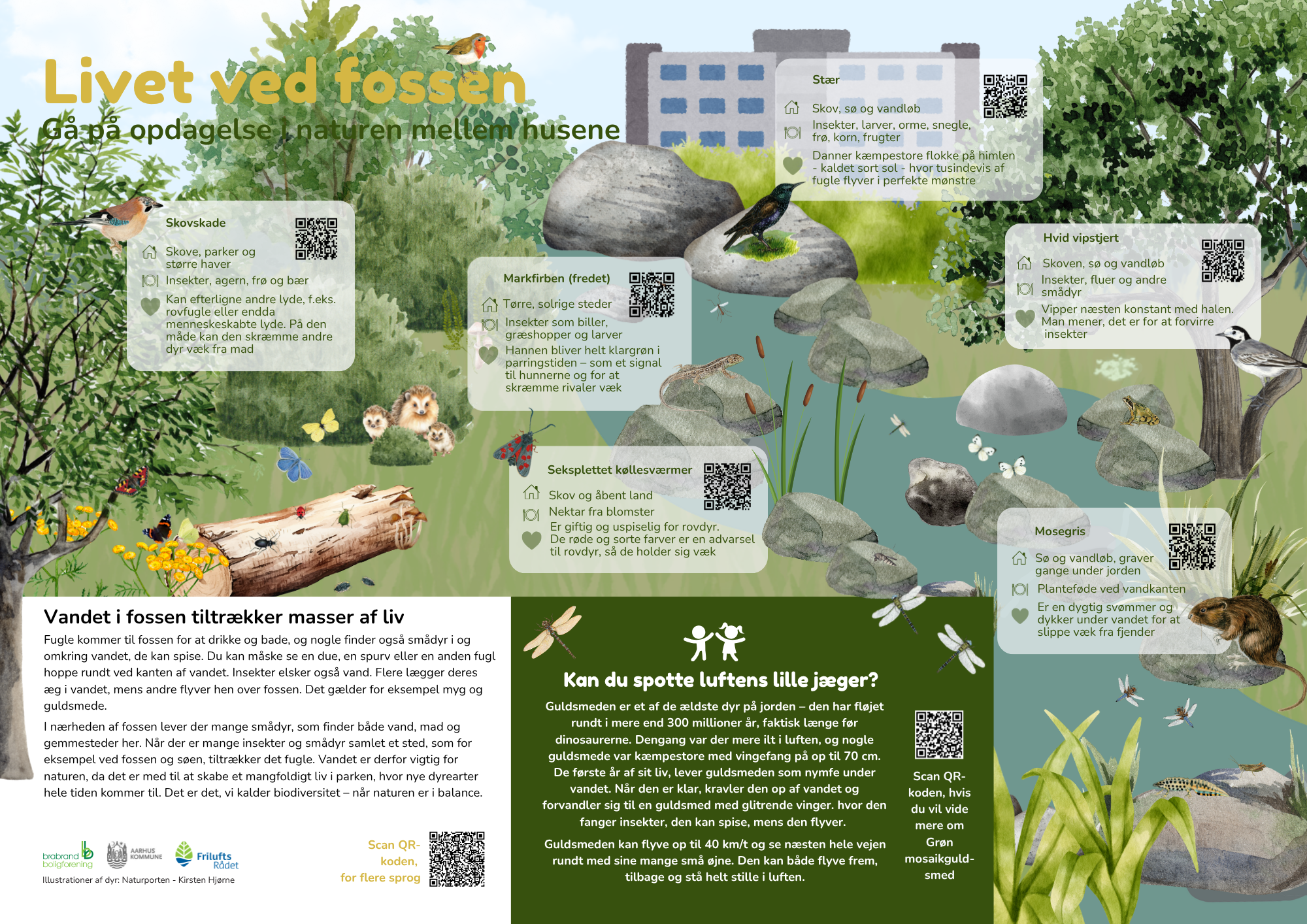
English:
Life by the stream
Discover nature between the buildings
Chaffinch
Habitat: Woodlands, parks and large gardens
Diet: Insects, seeds and berries
Did you know? Chaffinches can imitate other birds – and even man-made sounds. This can help keep other animals away from their food.
Common starling
Habitat: Woodland, lakes and streams
Diet: Insects, larvae, worms, snails, seeds, grains and fruit
Did you know? Starlings gather in enormous flocks called murmurations, creating breathtaking patterns across the sky.
White wagtail
Habitat: Woodland, lakes and streams
Diet: Insects, flies and other small animals
Did you know? The white wagtail is almost always wagging its tail. Scientists believe this may confuse insects, making them easier to catch.
Sand lizard (protected)
Habitat: Dry, sunny places
Diet: Insects such as beetles, grasshoppers and larvae
Did you know? During the breeding season, the male turns bright green to attract females and warn off rival males.
Six-spot burnet moth
Habitat: Woodland and open grassland
Diet: Flower nectar
Did you know? It is poisonous and unpleasant to eat. Its bright red and black colours warn predators to stay away.
Water vole
Habitat: Lakes and streams, where it digs burrows along the banks
Diet: Plants growing beside the water
Did you know? Water voles are excellent swimmers and can dive underwater to escape danger.
The stream is full of life
The stream attracts birds that come to drink and bathe. It is also home to many small animals looking for food and fresh water. If you look carefully, you may spot a duck, a sparrow or another bird hopping along the water's edge. Insects love the stream too. Many species lay their eggs in the water, while others spend the first part of their lives beneath the surface. This is true for mosquitoes, dragonflies and damselflies. Many small creatures live in and around the stream, where they find water, food and shelter. When different habitats come together – such as the stream and the surrounding park – even more wildlife is attracted to the area. Water is essential for nature. It creates rich biodiversity, where new species continue to thrive and settle. That is what happens when nature is healthy and balanced.
Give it a try!
Can you spot nature's tiny flying hunter?
Dragonflies are among the oldest animals on Earth. They have been flying for more than 300 million years—long before the dinosaurs.
Back then, some dragonflies had wingspans up to 70 centimeters.
Dragonflies begin life as aquatic nymphs beneath the water. When they are fully grown, they climb out of the water, shed their skin and emerge with shimmering wings. They catch insects while flying and can see almost 360 degrees thanks to their enormous compound eyes. They can fly forwards, backwards and even hover in mid-air. Scan the QR code to learn more about the Green Hawker dragonfly.
:العربية
الحياة بجوار الجدول
اكتشف الطبيعة بين المباني
Chaffinch
الموطن: الغابات، والمتنزهات، والحدائق الكبيرة
الغذاء: الحشرات، والبذور، والتوت
هل تعلم؟ يستطيع طائر الـ Chaffinch تقليد أصوات الطيور الأخرى، وحتى بعض الأصوات التي يصنعها الإنسان. وقد يساعده ذلك على إبعاد الحيوانات الأخرى عن طعامه.
Common starling
الموطن: الغابات، وضفاف البحيرات، والجداول
الغذاء: الحشرات، واليرقات، وديدان الأرض، والقواقع، والبذور، والحبوب، والفاكهة
هل تعلم؟ تتجمع أسراب الزرازير في مجموعات ضخمة ترسم أشكالًا مذهلة في السماء أثناء الطيران.
White wagtail
الموطن: الغابات، وضفاف البحيرات، والجداول
الغذاء: الحشرات، والذباب، والكائنات الصغيرة الأخرى
هل تعلم؟ يهز طائر الـ White wagtail ذيله باستمرار. ويعتقد العلماء أن هذه الحركة تربك الحشرات وتجعل اصطيادها أسهل.
Sand lizard (protected)
الموطن: الأماكن الجافة والمشمسة
الغذاء: الحشرات مثل الخنافس والجراد واليرقات
هل تعلم؟ في موسم التكاثر يتحول لون الذكر إلى الأخضر الزاهي لجذب الإناث وتحذير الذكور الأخرى.
Six-spot burnet moth
الموطن: الغابات والمروج العشبية
الغذاء: رحيق الأزهار
هل تعلم؟ هذه الفراشة سامة وغير صالحة للأكل، وتُعد ألوانها الحمراء والسوداء الزاهية رسالة تحذير للحيوانات المفترسة.
Water vole
الموطن: البحيرات والجداول، حيث يحفر جحوره على ضفاف المياه
الغذاء: النباتات التي تنمو بالقرب من الماء
هل تعلم؟ يُعد الـ Water vole سبّاحًا ماهرًا، ويمكنه الغوص تحت الماء هربًا من الخطر.
الجدول مليء بالحياة
يجذب الجدول الطيور التي تأتي للشرب والاستحمام. كما تعيش فيه وحوله كائنات صغيرة كثيرة تبحث عن الماء والغذاء. وإذا نظرت جيدًا، فقد ترى بطة، أو عصفورًا، أو طيورًا أخرى تتنقل على ضفاف الماء.
وتحب الحشرات أيضًا هذا الجدول. فالكثير منها يضع بيضه في الماء، بينما يقضي بعضها الجزء الأول من حياته تحت سطح الماء. وينطبق ذلك على البعوض، واليعاسيب، والرعاشات.
تعيش كائنات صغيرة كثيرة داخل الجدول وحوله، حيث تجد الماء والغذاء والمأوى. وعندما تجتمع بيئات طبيعية مختلفة، مثل الجدول والحديقة المحيطة به، فإنها تجذب عددًا أكبر من النباتات والحيوانات.
الماء عنصر أساسي للحياة. فهو يخلق بيئة غنية بـ التنوع الحيوي، مما يسمح لأنواع جديدة من الكائنات بالاستقرار والازدهار. وهذا ما يحدث عندما تكون الطبيعة صحية ومتوازنة.
جرّب بنفسك!
هل تستطيع العثور على الصياد الصغير الطائر؟
تُعد اليعاسيب من أقدم الحيوانات على وجه الأرض.
فقد كانت تحلق في السماء منذ أكثر من 300 مليون سنة، أي قبل ظهور الديناصورات بوقت طويل.
وفي ذلك الزمن، كان لبعض أنواع اليعاسيب أجنحة يصل امتدادها إلى 70 سنتيمترًا.
تبدأ اليعسوبة حياتها تحت الماء على شكل يرقة. وعندما تكتمل مراحل نموها، تخرج من الماء، وتتخلص من جلدها القديم، ثم تظهر بأجنحتها اللامعة الجميلة.
تصطاد الحشرات أثناء الطيران، ويمكنها الرؤية في جميع الاتجاهات تقريبًا بفضل عينيها الكبيرتين، كما تستطيع الطيران إلى الأمام، وإلى الخلف، وحتى الثبات في الهواء.
امسح رمز QR لتتعرف على المزيد حول Green Hawker dragonfly.
Soomaali:
Nolosha hareeraha durdurka
Soo ogow dabeecadda u dhexaysa dhismayaasha
Chaffinch
Deegaanka: Kaymaha, jardiinooyinka iyo beeraha waaweyn
Cuntada: Cayayaan, abuur iyo miro
Ma ogtahay? Chaffinch-ku wuxuu ku dayan karaa codadka shimbiraha kale – xitaa codad ay dadku sameeyaan. Tani waxay ka caawin kartaa inuu xayawaanka kale ka fogeeyo cuntadiisa.
Common starling
Deegaanka: Kaymaha, hareeraha harooyinka iyo durdurrada biyaha
Cuntada: Cayayaan, dirxiyo, gooryaanno, qoolleyo yaryar, abuur, badar iyo miro
Ma ogtahay? Starling-yadu waxay isu ururiyaan kooxo aad u waaweyn oo sameeya muuqaal qurux badan oo cirka ah.
White wagtail
Deegaanka: Kaymaha, hareeraha harooyinka iyo durdurrada biyaha
Cuntada: Cayayaan, duqsiyo iyo xayawaanno kale oo yaryar
Ma ogtahay? White wagtail-ku had iyo jeer wuxuu ruxaa dabadiisa. Saynisyahannadu waxay aaminsan yihiin in tani ay jahawareer geliso cayayaanka, taas oo u sahlaysa inuu qabto.
Sand lizard (protected)
Deegaanka: Meelo qallalan oo qorrax leh
Cuntada: Cayayaan sida duqsiyada adag (beetles), ayaxa iyo dirxiga
Ma ogtahay? Xilliga taranka, labku wuxuu isu beddelaa cagaar dhalaalaya si uu u soo jiito dheddigga ugana digo labka kale.
Six-spot burnet moth
Deegaanka: Kaymaha iyo dhulalka cawska leh
Cuntada: Nektarka ubaxa
Ma ogtahay? Waa sun, mana fiicna in la cuno. Midabkiisa casaanka iyo madowga ah ayaa ugaarsatada uga diga inay ka fogaadaan.
Water vole
Deegaanka: Harooyinka iyo durdurrada biyaha, halkaas oo uu ka qodo godad ku yaal hareeraha biyaha
Cuntada: Dhirta ka baxda hareeraha biyaha
Ma ogtahay? Water vole-ku waa dabaale aad u wanaagsan, wuxuuna quusi karaa biyaha hoostooda si uu uga baxsado khatar.
Durdurku wuxuu ka buuxaa nolol
Durdurku wuxuu soo jiitaa shimbiraha u yimaada inay cabbaan oo qubaystaan. Sidoo kale waa hoy ay ku nool yihiin xayawaanno badan oo yaryar oo raadinaya cunto iyo biyo nadiif ah. Haddii aad si fiican u fiirsato, waxaad arki kartaa shinbir, shimbir yar ama noocyo kale oo shimbiro ah oo ku socda hareeraha biyaha. Cayayaankuna sidoo kale waxay jecel yihiin durdurka. Noocyo badan ayaa ukumaha dhigta biyaha, halka qaar kalena qaybta hore ee noloshooda ku qaataan biyaha hoostooda. Tani waxay khusaysaa kaneecada, dragonflies iyo damselflies. Xayawaanno badan oo yaryar ayaa ku nool biyaha iyo hareerahooda, halkaas oo ay ka helaan biyo, cunto iyo hoy. Marka deegaano kala duwan ay isugu yimaadaan – sida durdurka iyo jardiinada ku xeeran – waxaa soo jiitama noocyo badan oo noolaha ah. Biyuhu waa lama huraan u ah dabeecadda. Waxay abuuraan kala duwanaansho badan oo noolaha ah, taas oo u saamaxaysa noocyo cusub inay ku noolaadaan oo ku bataan. Taasi waa waxa dhaca marka dabeecaddu caafimaad qabto oo isu dheellitirnaato.
Adiguba isku day!
Ma arki kartaa ugaarsadaha yar ee duula?
Dragonflies waa qaar ka mid ah xayawaannada ugu da'da weyn dunida.
Waxay hawada ku duulayeen in ka badan 300 milyan oo sano, xitaa ka hor intii aysan dinosaurs-ku noolaan.
Waagaas, dragonflies qaarkood waxay lahaayeen baalal gaadhaya 70 sentimitir.
Dragonfly-gu wuxuu noloshiisa ku bilaabaa biyaha hoostooda isagoo ah dirxi. Marka uu si buuxda u koro, wuxuu ka soo baxaa biyaha, wuxuuna iska siibaa maqaarkiisii hore ka hor inta uusan noqon cayayaan baallo qurux badan leh.
Wuxuu qabtaa cayayaanka isagoo duulaya, wuxuuna ku arki karaa ku dhowaad 360° indhihiisa waaweyn awgood. Wuxuu u duuli karaa hore, gadaal iyo xitaa meel qumman ayuu hawada ku hakisan karaa.
Sawir QR-ka si aad wax badan uga ogaato Green Hawker dragonfly.
Türkçe:
Dere Kenarındaki Yaşam
Binaların Arasındaki Doğayı Keşfedin
Chaffinch
Yaşam alanı: Ormanlar, parklar ve büyük bahçeler
Beslenme: Böcekler, tohumlar ve meyveler
Biliyor muydunuz? Chaffinch diğer kuşların, hatta bazen insanların çıkardığı sesleri bile taklit edebilir. Bu sayede diğer hayvanları yiyeceğinden uzaklaştırabilir.
Common starling
Yaşam alanı: Ormanlar, göl kıyıları ve dere kenarları
Beslenme: Böcekler, larvalar, toprak solucanları, salyangozlar, tohumlar, tahıllar ve meyveler
Biliyor muydunuz? Sığırcıklar gökyüzünde birlikte uçarak etkileyici şekiller oluşturan dev sürüler meydana getirir.
White wagtail
Yaşam alanı: Ormanlar, göller ve dere kenarları
Beslenme: Böcekler, sinekler ve diğer küçük canlılar
Biliyor muydunuz? White wagtail kuyruğunu sürekli sallar. Bilim insanları bunun böcekleri şaşırttığını ve avlanmasını kolaylaştırdığını düşünüyor.
Sand lizard (protected)
Yaşam alanı: Güneşli ve kuru alanlar
Beslenme: Böcekler, çekirgeler, kınkanatlılar ve larvalar
Biliyor muydunuz? Üreme döneminde erkeğin rengi parlak yeşile döner. Bu hem dişileri etkiler hem de diğer erkekleri uyarır.
Six-spot burnet moth
Yaşam alanı: Ormanlar ve çayırlar
Beslenme: Çiçek nektarı
Biliyor muydunuz? Zehirlidir ve yenmez. Kırmızı ve siyah renkleri yırtıcı hayvanlara bir uyarıdır.
Water vole
Yaşam alanı: Göller ve dereler; yuvasını su kenarındaki toprakta açar.
Beslenme: Su kenarında yetişen bitkiler
Biliyor muydunuz? Çok iyi bir yüzücüdür ve tehlike anında suyun altına dalarak kaçabilir.
Dere Yaşamla Dolu
Dere, su içmek ve yıkanmak için gelen kuşları kendine çeker. Aynı zamanda yiyecek ve temiz su arayan birçok küçük canlı için de önemli bir yaşam alanıdır. Dikkatle bakarsanız su kenarında ördekler, küçük kuşlar ve başka birçok tür görebilirsiniz. Böcekler de dereyi çok sever. Pek çok tür yumurtalarını suya bırakır ve yaşamlarının ilk bölümünü su altında geçirir. Sivrisinekler, yusufçuklar ve kızböcekleri buna güzel örneklerdir. Suyun içinde ve çevresinde yaşayan birçok küçük canlı burada yiyecek, su ve güvenli bir barınak bulur. Dere ile çevresindeki park gibi farklı yaşam alanları bir araya geldiğinde daha fazla bitki ve hayvan türü ortaya çıkar. Su, yaşamın temelidir. Doğanın sağlıklı ve dengeli kalmasını sağlayan biyolojik çeşitliliğin oluşmasına yardımcı olur.
Siz de deneyin!
Uçan küçük avcıyı görebiliyor musunuz?
Yusufçuklar dünyanın en eski hayvanlarından biridir.
Yaklaşık 300 milyon yıldır gökyüzünde uçuyorlar; yani dinozorlardan bile önce.
O zamanlar bazı yusufçukların kanat açıklığı 70 santimetreye kadar ulaşıyordu.
Yusufçuk yaşamına su altında bir larva olarak başlar. Büyüdüğünde sudan çıkar, eski derisini bırakır ve kanatlarını açarak uçmaya başlar.
Uçarken avlanır, büyük gözleri sayesinde neredeyse 360 derece görebilir ve ileri, geri hatta havada sabit durarak uçabilir.
Green Hawker dragonfly hakkında daha fazla bilgi edinmek için QR kodunu tarayın.